
Wednesday, June 5, 2013
NXT Robots
Before Spring Break we created a program for our NXT Robots. It was very neat to experience that and be able to utilize what we learned for programming.


Thursday, May 30, 2013
Marble Sorter
These past few days we have been working on putting together our Marble Sorters, which will be our final. Below is the process in which we will be following to collect points. Ian, Rebecca, and I were able to come together and make a lot of progress!
Process Achievements:
Organize it!: Title your post and organize it by section in a logical manner.
Brainstorm!: Provide at least four of your team’s brainstorming ideas for the design solution. This should include brainstorming sketches. Each sketch should include labels and descriptions for communication.

Enter the Matrix: Evaluate your solution ideas (4 minimum) using a decision matrix. Determine the best solution to the problem. Explain your rating system and share insight on why you rated your solutions as you did.

"I've Made a Few Special Modifications...": Document modifications made to your design during implementation. Explain the reason for the modifications and describe how the new design solution will solve the problem. "Story" is the split between expectation and outcome. Tell us a story regarding what your plan was and how it actually came out! Use photos and sketches to call out three changes. (Nerd points if you know where the quote for this Achievement title comes from)


Final Implementation: This section will showcase your final hardware and software solution. Include photos of your hardware and program. Call out atleast three key features of your design that were significant to its performance. Report how your solution performed in the challenge.

Reflection: Adress the four feedback types that we use in our courses (+, -, ?, !). Solicit feedback from someone outside of your team as well.
+: We finally were able to sort three different types of marbles.
-: Our design comes off a little messy, and it is not 100% effective.
?: How can we implement more systems?
!: It is so exciting that we actually finished this!
Process Achievements:
Organize it!: Title your post and organize it by section in a logical manner.
Brainstorm!: Provide at least four of your team’s brainstorming ideas for the design solution. This should include brainstorming sketches. Each sketch should include labels and descriptions for communication.

Enter the Matrix: Evaluate your solution ideas (4 minimum) using a decision matrix. Determine the best solution to the problem. Explain your rating system and share insight on why you rated your solutions as you did.

"I've Made a Few Special Modifications...": Document modifications made to your design during implementation. Explain the reason for the modifications and describe how the new design solution will solve the problem. "Story" is the split between expectation and outcome. Tell us a story regarding what your plan was and how it actually came out! Use photos and sketches to call out three changes. (Nerd points if you know where the quote for this Achievement title comes from)

This was our beginning design, but it was very, very simple and only sorted two different marbles. Also, this only used a program with the fan. We wanted to implicate a few more systems.

This design modification created added a lot more tilt, that created to much speed.
Final Implementation: This section will showcase your final hardware and software solution. Include photos of your hardware and program. Call out atleast three key features of your design that were significant to its performance. Report how your solution performed in the challenge.

Reflection: Adress the four feedback types that we use in our courses (+, -, ?, !). Solicit feedback from someone outside of your team as well.
+: We finally were able to sort three different types of marbles.
-: Our design comes off a little messy, and it is not 100% effective.
?: How can we implement more systems?
!: It is so exciting that we actually finished this!
Activity 3.1.4 and 3.1.5
Once again in these activities we made programs that could turn a light on and off automatically and with a switch.


Wednesday, May 22, 2013
Activity 3.1.3
In this activity we were able to create progam. Which in this case we connected the interface to the computer and openned up RoboPro. In RoboPro we made a program that would spin a motor. Here is a picture and video below.

Activity 3.1.1
In this activity we were making sure we knew how to use all the input and output function of the interface. Below is a picture where we wrote our work down from the handout.


Prop Cars
For about a month we have been working on prop cars. After a lot of readjustments and hard work our car ended up coming in first! It was definitely great to see hard work pay off.


Wednesday, March 27, 2013
Flow Charts: Activity 3.1.2
In engineering class we have been learning how to create accurate glow charts. This two below are from our Activity Sheet 3.1.2.


Thursday, March 21, 2013
How to Program NXT Robot
Below is a very useful video that explains how to program our NXT Robots!
http://www.youtube.com/watch?v=AzRRulYvVdY&sns=em
http://www.youtube.com/watch?v=AzRRulYvVdY&sns=em
Friday, February 22, 2013
Activity 2.1.7 Week 7
This week we worked on calculating Truss Forces. Something that was useful that I learned was 2J=M+R. The J meaning joints, M: members and R: reactions. Thus helped us solve static determinacy.


Thursday, February 14, 2013
Trusses
This week we took on Trusses! We worked on taking the angles and lengths of each of the parts. At times it was a but confusing, but we got through it.

Friday, February 8, 2013
Moment Calculations
Wednesday in class, we worked on calculating moments. Probably the most difficult part was converting from grams to newtons. Though my group was successful in completing the task!

Wednesday, January 30, 2013
Sea Perch
Within the next few days we are going to have competitions between our ROV Submarines. Our team was put in charge of coordinating Tug of War. We have decided on a bracket, below. Also, today we had make buoys for or competitions.


Thursday, January 10, 2013
Leadership 101
The past two days we have worked on leadership. The class is divided into groups, each with a team leader. Though we had a class discussion about what makes a leader, mostly referring to characteristics. For example, charisma and authority are two main traits a leader should uphold. We also viewed leadership as a stool. Leadership being the seat an direction, alignment, and commitment being the legs.

Sunday, October 21, 2012
Cardboard Canoe Challenge
This is my second year doing the Cardboard Canoe Challange and this year our boat was pretty successful!
We recieved 15 Achievements!

 Design Achievements:
• Define the Problem and Brainstorm Solutions - State the problem you are designing a solution for. List at least 20 ideas you have regarding your solution.

• Criteria & Constraints - List or reference the specified Criteria and Constraints you're designing for. List at least one implied criteria. List at least three implied contsraints.
 • Sketch Ideas - Draw 3 different sketches for possible designs. Label at least 3 key features for each sketch. Describe the feature's functionality so a viewer understands why the called out feature is important.
• Prototype Ideas - Craft physical prototypes (models) of each of your three sketches. Use a notecard or post it note to call out at least one key feature on each model. Post the images to your blog and describe the key feature that you've pointed out on each.


• Select an Approach - Generate feedback (+, change, ?, !) and make a decision matrix regarding your sketches/prototypes. Specify the approach you've chosen and justify your selection.
+: We had a pointed from so we wouldn't plow through the water, we could cut through it.
Change: For the box design we thought the weight wouldnt be distributed how it should.
?: Why tho coffin style?
!: The length of the design we went with really helped the weight be distributed properly.
• Surface area! - Calculate how much surface area you can cover with your given duct tape. How many sf can you cover with one roll? How many can you cover with all your rolls? What % efficiency do you think you can achieve with your overlap?

Build Achievements:
• Build It! - Build your watercraft. Your build must meet the standards of construction (100% covered in Duct Tape). Document it with a presentable photo.

Test Achievements:
• The Farthest - Awarded to the team that can travel the furthest (laps)
• The Longest - Awarded to the team with the watercraft that floats the longest (multiple teams may be awarded this achievement if multiple boats remain afloat at the end of our competition period).
• Balance Master - Awarded if you can have at least one person stand for 5 seconds in the boat (you must conduct this away from the edge of the pool so that non one falls over and hits their head)
• Videographer - Take video of the challenge and post to your blog.
Reflection Achievements:
• Feedback - Generate ten items of feedback for your effort (from the design/build process and/or the actual product). Make sure you include at least one item of feedaback in each of our four feedback areas (+, change, ?, !)
+: Our canoe floated!! We were able to use a lot of cardboard and tape.
change: I would add more cardboard to the triangle in the front it began to gain water quickly
?: What would happen if we added one more layer of cardboard to the bottom of the boat?
!: Our canoe did quite well, everyone was really enthusiastic about it, which definitely helped!
• How Low Did You Go? - How low in the water did your canoe sit (roughly)? Was it suprising how little your boat went down in the water? What is the unit weight of water in pounds? How much did your pilot weigh (roughly)? Use math to help explain the depth that your boat sat in the water.
I would say we rougly sat down about 2 inches in the water. It was actually surprising how high it sat. A cubic foot of water is about 68 pounds, our pilot weighed about 120 pounds.
• Redesign - If we were to do another Carboard Canoe race next semester, what would you build? Draw from everything you experienced in your class and propose the most competative solution. Include a sketch with key features and dimensions labeled.
We could add flats to the side of our canoe just for extra stabability!
• (Make Your Own Achievement) - Make an achievement of your own design that you can award yourself for something awesome your team did. (Example "Transformer" - although our canoe sunk, our team was able to convert it into a surfboard style design and continue competeting!)
Extreme Balance-Stand up on your float for atleast 20 seconds!
We recieved 15 Achievements!


• Define the Problem and Brainstorm Solutions - State the problem you are designing a solution for. List at least 20 ideas you have regarding your solution.
• Criteria & Constraints - List or reference the specified Criteria and Constraints you're designing for. List at least one implied criteria. List at least three implied contsraints.
• Prototype Ideas - Craft physical prototypes (models) of each of your three sketches. Use a notecard or post it note to call out at least one key feature on each model. Post the images to your blog and describe the key feature that you've pointed out on each.


• Select an Approach - Generate feedback (+, change, ?, !) and make a decision matrix regarding your sketches/prototypes. Specify the approach you've chosen and justify your selection.
+: We had a pointed from so we wouldn't plow through the water, we could cut through it.
Change: For the box design we thought the weight wouldnt be distributed how it should.
?: Why tho coffin style?
!: The length of the design we went with really helped the weight be distributed properly.
• Surface area! - Calculate how much surface area you can cover with your given duct tape. How many sf can you cover with one roll? How many can you cover with all your rolls? What % efficiency do you think you can achieve with your overlap?
Build Achievements:
• Build It! - Build your watercraft. Your build must meet the standards of construction (100% covered in Duct Tape). Document it with a presentable photo.
Test Achievements:
• The Farthest - Awarded to the team that can travel the furthest (laps)
• The Longest - Awarded to the team with the watercraft that floats the longest (multiple teams may be awarded this achievement if multiple boats remain afloat at the end of our competition period).
• Balance Master - Awarded if you can have at least one person stand for 5 seconds in the boat (you must conduct this away from the edge of the pool so that non one falls over and hits their head)
• Videographer - Take video of the challenge and post to your blog.
Reflection Achievements:
• Feedback - Generate ten items of feedback for your effort (from the design/build process and/or the actual product). Make sure you include at least one item of feedaback in each of our four feedback areas (+, change, ?, !)
+: Our canoe floated!! We were able to use a lot of cardboard and tape.
change: I would add more cardboard to the triangle in the front it began to gain water quickly
?: What would happen if we added one more layer of cardboard to the bottom of the boat?
!: Our canoe did quite well, everyone was really enthusiastic about it, which definitely helped!
• How Low Did You Go? - How low in the water did your canoe sit (roughly)? Was it suprising how little your boat went down in the water? What is the unit weight of water in pounds? How much did your pilot weigh (roughly)? Use math to help explain the depth that your boat sat in the water.
I would say we rougly sat down about 2 inches in the water. It was actually surprising how high it sat. A cubic foot of water is about 68 pounds, our pilot weighed about 120 pounds.
• Redesign - If we were to do another Carboard Canoe race next semester, what would you build? Draw from everything you experienced in your class and propose the most competative solution. Include a sketch with key features and dimensions labeled.
We could add flats to the side of our canoe just for extra stabability!
• (Make Your Own Achievement) - Make an achievement of your own design that you can award yourself for something awesome your team did. (Example "Transformer" - although our canoe sunk, our team was able to convert it into a surfboard style design and continue competeting!)
Extreme Balance-Stand up on your float for atleast 20 seconds!
Wednesday, September 26, 2012
Mouse Trap Car
The school year of 2012-2013 has begun, and we are kicking things off with the Mouse Trap Race Car. So far we have earned 14 achievements. With our Mouse Trap Car we won the distance race and got runner up for the acceleration race.
Design:"Brainiac" - Brainstorm solutions for your design. Generate a list of at least 10 ideas/concepts.

"Visualize It!" - Create a sketch of a design and label key features.

Build:"Build It" - Build your design. Document it with a photo.
Original Design:

Final Design:

"The Price of Glory" - If each part you use costs $1, generate a total cost for your build.
The total price of our car would be $50.
Test (Compete):
Each car will compete on its own. Everyone will take 3 turns and use their best result. Cars are evaluated on acceleration and total distance covered. Generate your design accordingly.
"Competitor" - Compete in the 2nd Annual Mousetrap Racecar Challenge.
"Long Distance Winner!" - Travel the furthest in the race.
"Going the Mile!" - Travel the furthest or second furthest in the race.
"Led Foot" - Be the team with the fastest time covering the first 24" of the track.
"Heavy Foot" - Be the team with the fastest or second fastest time to cover the first 24" of the track.
"Feedback" - Collect feedback (at least one each of +, change, ? and !) from yourself or your classmates.
+ With our design we were able to win the distance award!
Change: Make it easier to wind up the string on the car
? How could we make the wheels a little tighter
! We were able to change our design to create a pretty good one!
Iterate:
"Re-work" - Change your build based on your experience with the race/feedback you collected. Document any changes.
The documented changes are under the build it section.
"Game Changer" - Develop a new rule or change to the game that you feel would make the event better. Explain your concept.
A new rule could be that you could only use a certain amount of materials. This would limit what people coud use and make it more difficult, but also the feeling of accomplishment at the end.
"Name it" - Invent a name for an achievement that you think is better than what we have currently.
There should be a video achievement, if you post video then you could get an achievement point.
Clean Up:
"Leave It Cleaner Than You Found It" - Did you leave your workspace cleaner than you found it? Explain.
I believe that our group kept our area clean because everyday we would clean up all of our materials.
Reflection:
"Design/Build" - What is a "Design/Build" process? How did your experience with this challenge relate to that? Why might you experience this in a career related to technical innovation?
The design/build process is the continuing process where your begin with defining the problem and ending with communicating the results.
Here is a class picture of our design/build process:

Design:"Brainiac" - Brainstorm solutions for your design. Generate a list of at least 10 ideas/concepts.

"Visualize It!" - Create a sketch of a design and label key features.

Build:"Build It" - Build your design. Document it with a photo.
Original Design:

Final Design:

"The Price of Glory" - If each part you use costs $1, generate a total cost for your build.
The total price of our car would be $50.
Test (Compete):
Each car will compete on its own. Everyone will take 3 turns and use their best result. Cars are evaluated on acceleration and total distance covered. Generate your design accordingly.
"Competitor" - Compete in the 2nd Annual Mousetrap Racecar Challenge.
"Long Distance Winner!" - Travel the furthest in the race.
"Going the Mile!" - Travel the furthest or second furthest in the race.
"Led Foot" - Be the team with the fastest time covering the first 24" of the track.
"Heavy Foot" - Be the team with the fastest or second fastest time to cover the first 24" of the track.
"Feedback" - Collect feedback (at least one each of +, change, ? and !) from yourself or your classmates.
+ With our design we were able to win the distance award!
Change: Make it easier to wind up the string on the car
? How could we make the wheels a little tighter
! We were able to change our design to create a pretty good one!
Iterate:
"Re-work" - Change your build based on your experience with the race/feedback you collected. Document any changes.
The documented changes are under the build it section.
"Game Changer" - Develop a new rule or change to the game that you feel would make the event better. Explain your concept.
A new rule could be that you could only use a certain amount of materials. This would limit what people coud use and make it more difficult, but also the feeling of accomplishment at the end.
"Name it" - Invent a name for an achievement that you think is better than what we have currently.
There should be a video achievement, if you post video then you could get an achievement point.
Clean Up:
"Leave It Cleaner Than You Found It" - Did you leave your workspace cleaner than you found it? Explain.
I believe that our group kept our area clean because everyday we would clean up all of our materials.
Reflection:
"Design/Build" - What is a "Design/Build" process? How did your experience with this challenge relate to that? Why might you experience this in a career related to technical innovation?
The design/build process is the continuing process where your begin with defining the problem and ending with communicating the results.
Here is a class picture of our design/build process:

We definitely used this process a lot! We began with brainstorming, and then we would make a model of the design, but we changed the design many times. This process is used a lot in the real world, even in everyday work. For example, if you are a builder you have to decide what your going to build. Then make a blueprint of the design. Next, change your design if that first doesnt work and so on.
Video
Video
Wednesday, May 30, 2012
Activity 3.1.1 Visual Design Principles and Elements Identification
Recently in Engineering class we have been studying principles and elements of an object. The object that I have chosen to describe is a table. It is a regular household item that people use daily.
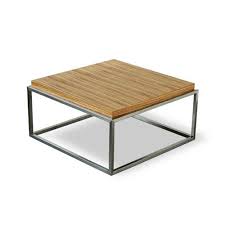
Elements: Straigh lines, rectangular shapes, very geometric, spacious, smooth texture
Principles: balanced and symmetrical, the straight colored lines on the top create a smooth repeating rhythm, emphasis on the top with a different material (wood) and a different color
TED
1) What is the TED organization about?
- It is a non-profit organization devoted to spreading ideas.
2) What is the purpose of their website and how does the functionality of their site support that?
-There purpose is to spread ideas or knowledge worth knowing. They have a series of videos to watch and discover.
3) As Engineers and Problem Solvers, which topic areas (the choices from the "Show talks related to:" section on the sidebar) are of most interest to us? Justify your answer.
-As problem solvers we should be interested in the design topic because being an engineer is all about design. Just like how are Iterative Design Process is related to engineering.
4) Based on your previous answer, what are 3 talks (videos) on the site that appear like they would be of most interest to you as an Engineer/Problem Solver? Justify your choices.
-Steve Jobs: How to Live Before You Die- Steve Jobs does a commencement speech for Stanford, he talks about how to design his
-John Hunter on the World Peace Game
-Yves Rossy: Fly with the Jetman
5) Each student will watch a unique video (clear your choice with me... first come, first served!). Watch the video. Embed the video in your blog post and create a bulletized outline of the key issues presented in the talk.
6) How could you get involved in the field/technology/issue you chose to hear about? What experience/skills/training/education would you need to learn to get involved with this field?
In the field that was shown, to go to Stanford I need to keep good grades and work hard. But how Steve Jobs operates, he followed what he loved which didnt mean a very intense education, he just stayed on a path that kept him happy. It might have been a struggle at sometims, but it worked for him.
Wednesday, May 23, 2012
USS Carl Vinson & More
For six days of May, I was fortunate enough to meet my Dad on the carrier he is currently stationed on. He has been working for 6 months on the USS Carl Vinson; it is a Naval Aircraft Carrier. Potentially every time a carrier comes back to its assigned base, many military workers push for a Tiger Cruise. A Tiger Cruise is when a military member is allowed the chance to bring family or friends on board the carrier for 6 days. During the week I was on the ship my task for engineering was to first, describe my Dads job on the ship, and secondly research three uses of technology on board.
Onboard the USS Carl Vinson my dad is the Chief of Staff for Carrier Strike Group 1. His job is to assist the Commander (the Strike Group Admiral), in development and execution of his Commander's Guidance. Meaning the Admiral is in charge of leading all his assigned ships, aircraft, and sailors into battle. My dad assists the admiral in ensuring the war plans are properally developed and attainable with the assets he has assigned. The military readiness and capability is not a for profit venture, however I witnessed several cost saving measures (reductions of operations, personnel, and units assigned). The approximate daily operations budget for the Strike Group is 3 to 5 million dollars. The risk involved with Carrier Strike Group Operations I feel is high, however military operations are inherently risky. Todays military employs several systems for risk mitigations, one of which is called Operational Risk Management. While onboard the Vinson I witnessed several examples of risk management (protective equipment, safety observers, quality assurance, reps, training, and intolerance to unnecessary exposure to risk).
First, I found three systems of technology that are very commonly used, the catapult system, the resting gear, and finally the anchors (catapult slack).
The resting gear is a major part of aircraft landing on the ship. It is the cable that the aircraft catches to be stopped on the carrier. The component that is inputed is the tailhook of a plane catching the cable to stop the plane. Instantaneously, hydrolic fluid is compressed in a piston below the flight deck. It is compressed from a 20 in cylinder to a 5 inch cylinder. The hydraulic force is able to contract the cable back to where it needs to be. The cycle is continious fromo kinetic to hydrolic to mechanical energy. This system takes approximately 21-22 seconds to complete. So on a regular Flight Ops day planes are catching the catapult every 40 seconds.


The second system I was informed about was the catapult. The catapult system is what launches the planes while on a carrier. It is much more complex than the resting gear. But the basics are similar to the resting gear, considering hydraulic fluid begins to flow then steam opens through an airflask sending the catapult forward. In fact the airflask consists of 2150 psi worth of air.


Lastly, is the anchor gear. This is not the same thing as the anchors that are dropped in the water. This gear has to do with the arresting gear. Since the pilots in the aircraft cannot land perfectly on the center of the cable everytime, the cable will have some slack in it. So the input is the tailhook of the aircraft reaching the cable, and the output is slack being taken out of the cable. Once the jet lands the system determines the amount of slack to take out, which could go out to about 20 feet. A piston is the sent through a shaft evening out the line.


Friday, May 4, 2012
Minecraft
We have just begun our Minecraft unit. This intertwines with our Architecture project because we were supposed to create a building that represents a few of the architects we researched. I represented Mies van der Rohe, Frank Llyod Wright and Tadao Ando. Mies van der Rohe allows a lot of light into his buildings, i used large glass windows. Frank Llyod Wright uses overhangs on his buildings mine goes over the water. Finally, Tadao Ando uses concrete, the base of each of my floors has concrete as a floor.


Subscribe to:
Posts (Atom)